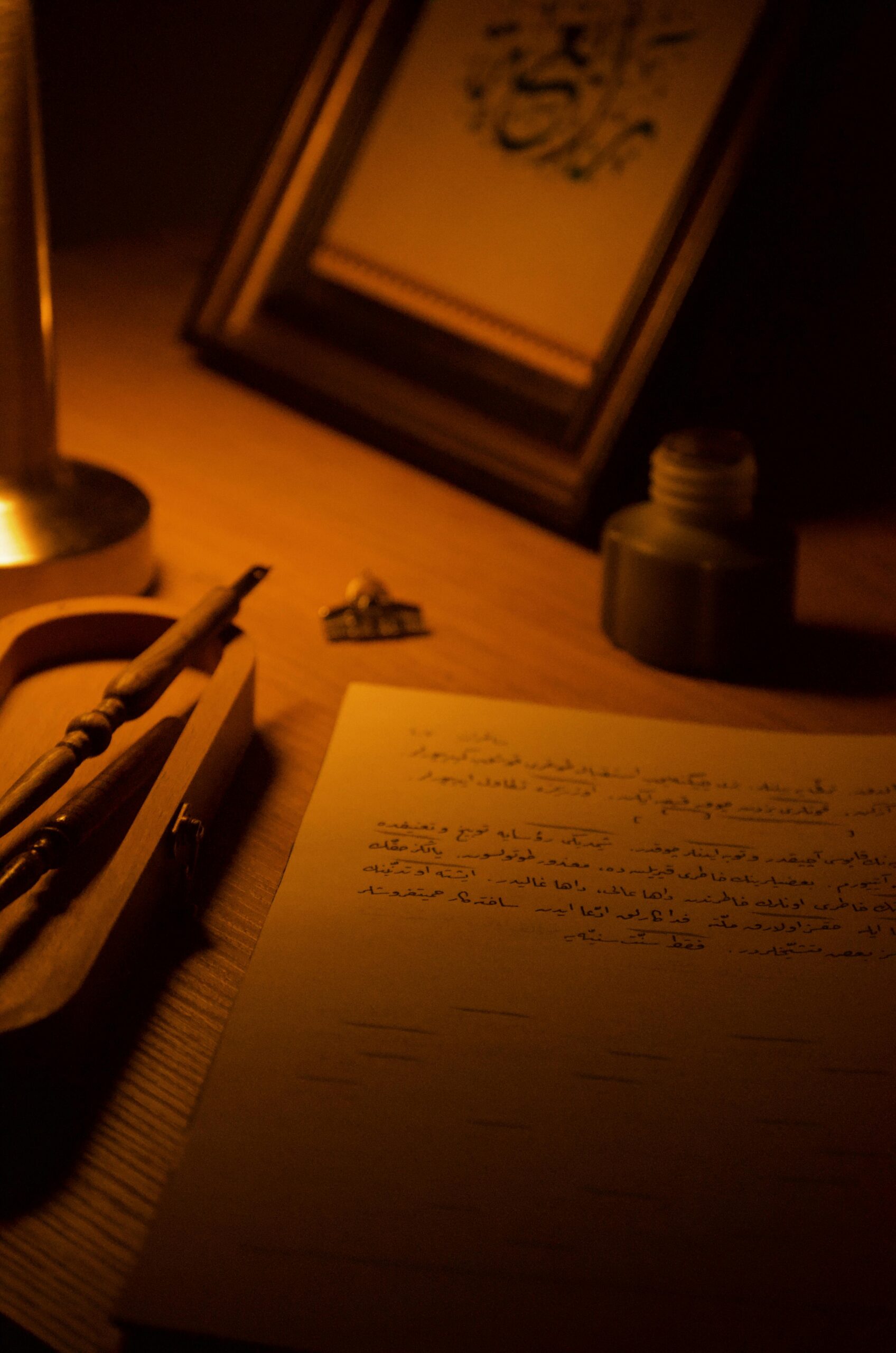
In March 2026, Arabic calligraphy (khatt) is recognized by UNESCO as an Intangible Cultural Heritage of Humanity. It is an art form where the spiritual, the mathematical, and the aesthetic converge. Unlike Western scripts, which evolved primarily for legibility, Arabic calligraphy was developed as a medium to preserve the Quran, making it a “geometry of the soul.”
1. The Core Styles (The Six Pens)
By the 10th century, the “Six Pens” (al-Aqlam al-Sittah) were codified, creating a standardized system of proportions based on the Nukta (a diamond-shaped dot created by the pen’s nib).
- Kufic: The oldest and most architectural style. It is defined by bold, angular, and horizontal strokes. In 2026, Kufic has seen a massive “Modernist” revival in minimalist logo design and urban murals due to its geometric clarity.
- Naskh: The “copying” script. It is the most legible and balanced style, used for almost all printed Qurans and modern books. It is defined by its thin lines and rounder characters.
- Thuluth: The “King of Scripts.” Known for its long vertical lines and complex interweaving, it is rarely used for long texts but is the gold standard for mosque architecture and monumental inscriptions.
- Diwani: Developed in the Ottoman chancery, this style is highly decorative and cursive, with letters that overlap and soar. It was historically used for royal decrees because its complexity made it difficult to forge.
2. The Mathematical Foundation: The Nukta System
Arabic calligraphy is not “freehand”; it is a rigorous science. In 2026, calligraphers still use the system developed by Ibn Muqla, where every letter’s height, width, and curve are measured in Nuktas.
- The Alif: The first letter, the Alif, acts as the “ruler” for the entire alphabet. For example, in the Thuluth style, the Alif is exactly seven dots high.
- The Circle: Every letter must fit within an invisible circle derived from the length of the Alif, ensuring a cosmic sense of proportion and harmony throughout the text.
3. Spiritual and Symbolic Meanings
In the Islamic tradition, the “Pen” (Qalam) is the first thing God created. This gives the art form a unique weight:
- The Infinite: Many calligraphic designs are “Zoomorphic” (shaped like animals) or “Tughra” (imperial seals), symbolizing that the Word of God can take any form in the universe.
- Meditation in Motion: For the calligrapher, the act of writing is a form of Dhikr (remembrance). The slow, rhythmic breath required to draw a single “Waw” or “Lam” is a meditative practice that prioritizes the internal state of the artist over the final product.
4. Cultural Impact in 2026: “Calligraffiti”
The most significant cultural shift this year is the explosion of Calligraffiti—a hybrid of traditional khatt and modern street art.
- Public Identity: Artists like eL Seed use large-scale calligraphic murals (often in “Lost” scripts) to beautify marginalized urban areas, turning the script into a tool for social cohesion.
- Digital Sovereignty: In 2026, AI-driven calligraphy tools are being used by young designers in the MENA region to create “Generative Calligraphy,” where traditional rules are fed into algorithms to create 3D-printed sculptures and interactive digital installations.
- Fashion and Luxury: From high-end watch faces to couture textiles, the Arabic script is used globally as a symbol of “The New Luxury”—representing artisanal labor and deep historical roots.
5. Summary: The 2026 Perspective
| Feature | Traditional Calligraphy | Modern Calligraffiti |
| Tool | Reed Pen (Qalam) | Spray Can / Digital Stylus |
| Medium | Burnished Paper (Ahar) | Concrete Walls / VR Spaces |
| Purpose | Sacred Preservation | Cultural Expression / Activism |
| Philosophy | Strict Proportionality | Expressive Deconstruction |
Artistic Insight: In 2026, the most sought-after calligraphy is that which shows “Sabbara”—the natural variation in ink flow that proves a human hand navigated the resistance of the paper.