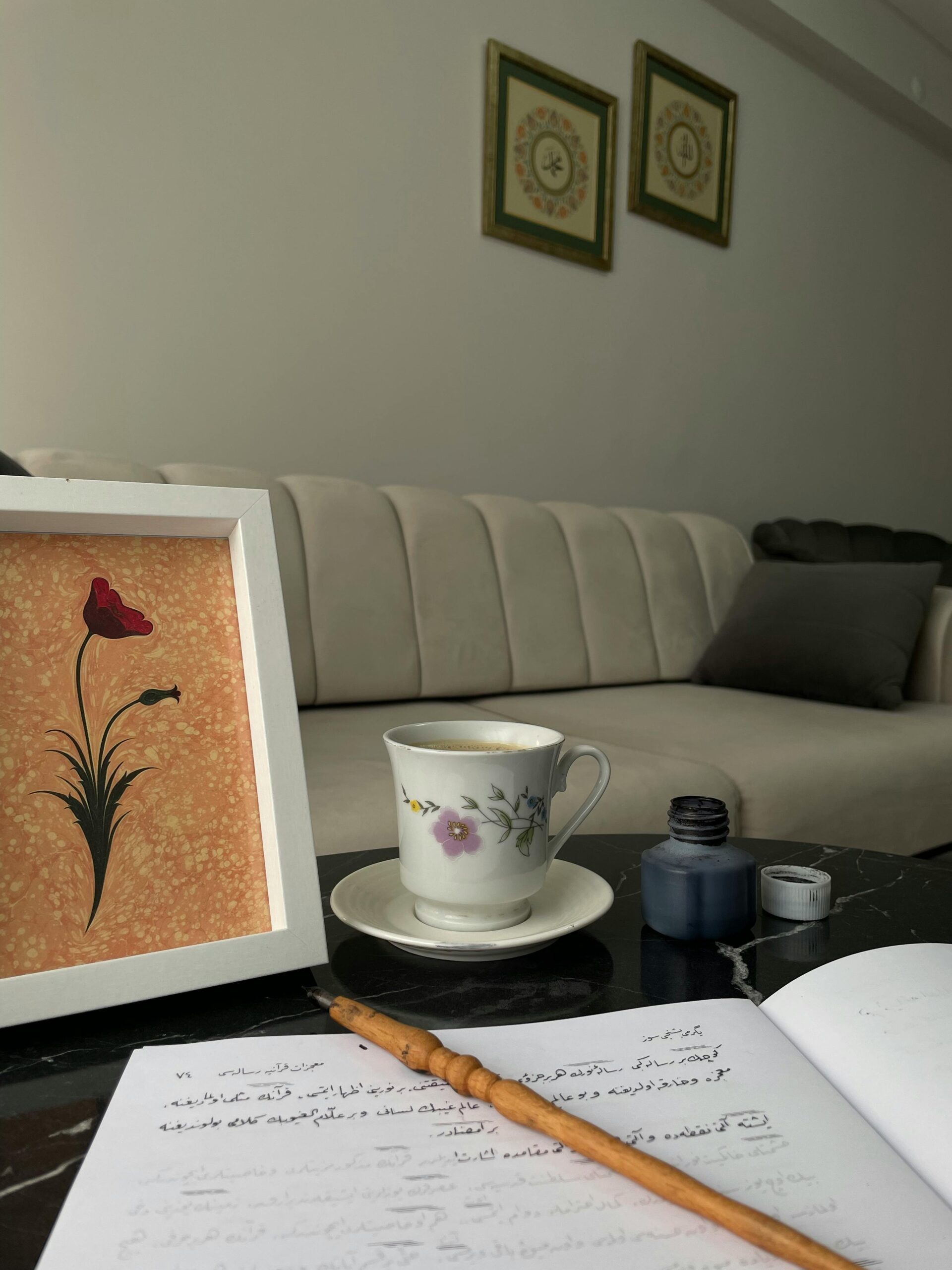
Calligraphy is far more than “beautiful handwriting”; in 2026, it is celebrated as a high-form meditative art that bridges the gap between historical tradition and modern graphic design. While digital fonts dominate our screens, the “human stroke” of global calligraphy has become a prestigious marker of authenticity and luxury.
Here is a journey through the most influential calligraphic traditions across the globe.
1. Western Calligraphy: The Latin Script
Western calligraphy is defined by its use of the broad-edged nib and its evolution through the medieval and Renaissance periods.
- Blackletter (Gothic): Known for its heavy, angular, and dramatic strokes. It dominated Europe from the 12th to the 16th century. In 2026, it is a staple of “Neo-Medieval” branding and street art.
- Copperplate (English Roundhand): Created with a fine, flexible pointed nib. It is defined by delicate hairlines and thick swells created by pressure. It remains the gold standard for formal invitations and high-end diplomas.
- Italic: Developed during the Renaissance, this style is characterized by a slight slant and fluid, rhythmic connections. It is often the first style taught to modern students due to its legibility.
2. Arabic Calligraphy: The Spiritual Geometry
Arabic calligraphy (khatt) is unique because of its deep connection to the Quran and its mathematical precision. It is often viewed as “geometry of the soul.”
- Kufic: The oldest form, characterized by bold, rectangular, and architectural shapes. It was traditionally used for stone inscriptions and early manuscripts.
- Thuluth: One of the most elegant and difficult styles to master. It features long, sloping vertical lines and complex interweaving, often seen on the walls of mosques (like the Taj Mahal).
- Naskh: The most common script for printing and everyday writing because of its clarity and balance.
3. East Asian Calligraphy: The “Four Treasures”
In China, Japan, and Korea, calligraphy (Shufa/Shodo) is considered one of the highest art forms, focusing on the flow of Qi (energy) through the brush.
- Seal Script (Zhuanshu): The oldest style, featuring uniform thickness and ancient, pictographic forms.
- Cursive / “Grass” Script (Caoshu): A highly abstract and expressive style where characters are written in a single, continuous flow. It prioritizes emotional energy over legibility.
- Regular Script (Kaishu): The standard, clear form of writing. It is the foundation for all beginners and the basis for modern printed characters.
4. Indic and Ethiopic Traditions
These scripts are often defined by their unique structural “headers” and rounded forms.
- Devanagari Calligraphy: Used for Sanskrit, Hindi, and Marathi. It is instantly recognizable by the horizontal line (shirorekha) that runs along the top of the characters, “hanging” the letters from a bar.
- Ge’ez (Ethiopic): One of the oldest living scripts in Africa (used in Ethiopia and Eritrea). It features blocky, rhythmic characters with a distinct visual “tempo,” traditionally used for religious manuscripts.
5. Comparison: Tools and Techniques
| Tradition | Primary Tool | Writing Surface | Key Characteristic |
| Western | Metal Nib / Quill | Vellum / Heavy Paper | Contrast between thick & thin. |
| Arabic | Qalam (Reed Pen) | Ahar (Burnished Paper) | Mathematical “Dot” proportions. |
| East Asian | Animal Hair Brush | Rice Paper (Xuan) | Emphasis on “Pressure & Flow.” |
| Indic | Bamboo Pen / Reed | Handmade Paper | The top horizontal bar. |
6. Summary: Calligraphy in 2026
In 2026, we are seeing a “Calligraffiti” explosion—a hybrid movement where traditional calligraphic strokes are used in large-scale urban murals. This movement proves that while the tools may change (from reeds to spray cans), the human desire for rhythmic, handwritten expression is permanent.
Calligraphy Note: In 2026, the most valued calligraphic pieces are those that show “Ink Texture”—visible variations in the ink’s transparency that prove the piece was written by a human hand rather than a laser printer.